

Fleeing to avoid taking part in the killings in his home country, Kadjosi Matabishi and three of his relatives boarded a fuel truck in Burundi and crossed the border into Kenya, in the hope of rebuilding their lives.
When we arrived in Nairobi, the truck driver exchanged our last US dollars for Kenyan shillings and went on his way. We found ourselves standing at a bus station, tired, silent, yet our hearts were full of questions. Where do we go now? We looked at each other quietly, each one trying to stay calm while feeling fear deep inside.
Our English was still poor, and the Kenyan Swahili sounded like music with words we could not understand. We failed to communicate. Even buying food became a great challenge. We mentioned the names in French, but they used English. We asked, “Do you have this?” and they replied, “No.” Yet it was there! The language difference became a major barrier. Eventually, we had to use our hands and gestures to explain what we wanted.
We were left without a place to go. We had to be careful with the funds we had, which were not enough to pay rent and barely enough to feed ourselves. With no relatives in Nairobi to harbor us, we had to take shelter in an unfinished building without windows, doors, or electricity. I was with my cousin, my step sister, and her two-year-old girl child. The baby often cried from hunger and cold and her restlessness made every moment harder. We slept on the cold floor, feeling the wind blowing through the incomplete walls, whispering prayers for help. The night was long, and the cold pierced our bones. We held each other close, clinging only to hope.
We had left home in a hurry. We fled with nothing. Passports, school certificates, clothes, shoes, everything was left behind. Days dragged on slowly. One day, two, three… up to nine (9). We had only what we wore, fear, and faith that God would open a way. And He did.

One day, a kind hearted woman appeared like a ray of hope in our darkness. She noticed how we were living, young people with a little child in an unfinished house. Her eyes filled with tears. She spoke Swahili and was difficult to understand, but in a gentle voice, she told us: “There is an organization that helps people like you, it’s called UNHCR. They might be able to help you.”
We were astonished. We had only heard that name back in school, as a distant word, something unreal. We never thought we would one day see their office with our own eyes. The woman lovingly explained how the UNHCR helps people who have lost their homes, those who fled war and persecution. As she spoke, hope slowly began to shine within us, like the morning sun piercing through the clouds. The next day, she led us to the gates of the UNHCR office. We walked slowly, our hearts beating fast, our hands trembling. It was our first time seeing a place where we felt perhaps our destiny could begin anew.
When we reached the gate, we looked at each other ,with fear and hope. A mixture of pain and new dreams. That was the beginning of our journey as official refugees, a journey of hope, renewal, and the discovery of the true meaning of humanity helping humanity.
Next week, Kadjosi will tell us more about the UNHCR camp and what it has meant to him and other refugees. It was, as the name indicates, a place of refuge. It was a place where hope could grow and where the young man from the DRC would begin to fulfill the name his father gave him: Matabishi – gift to society.
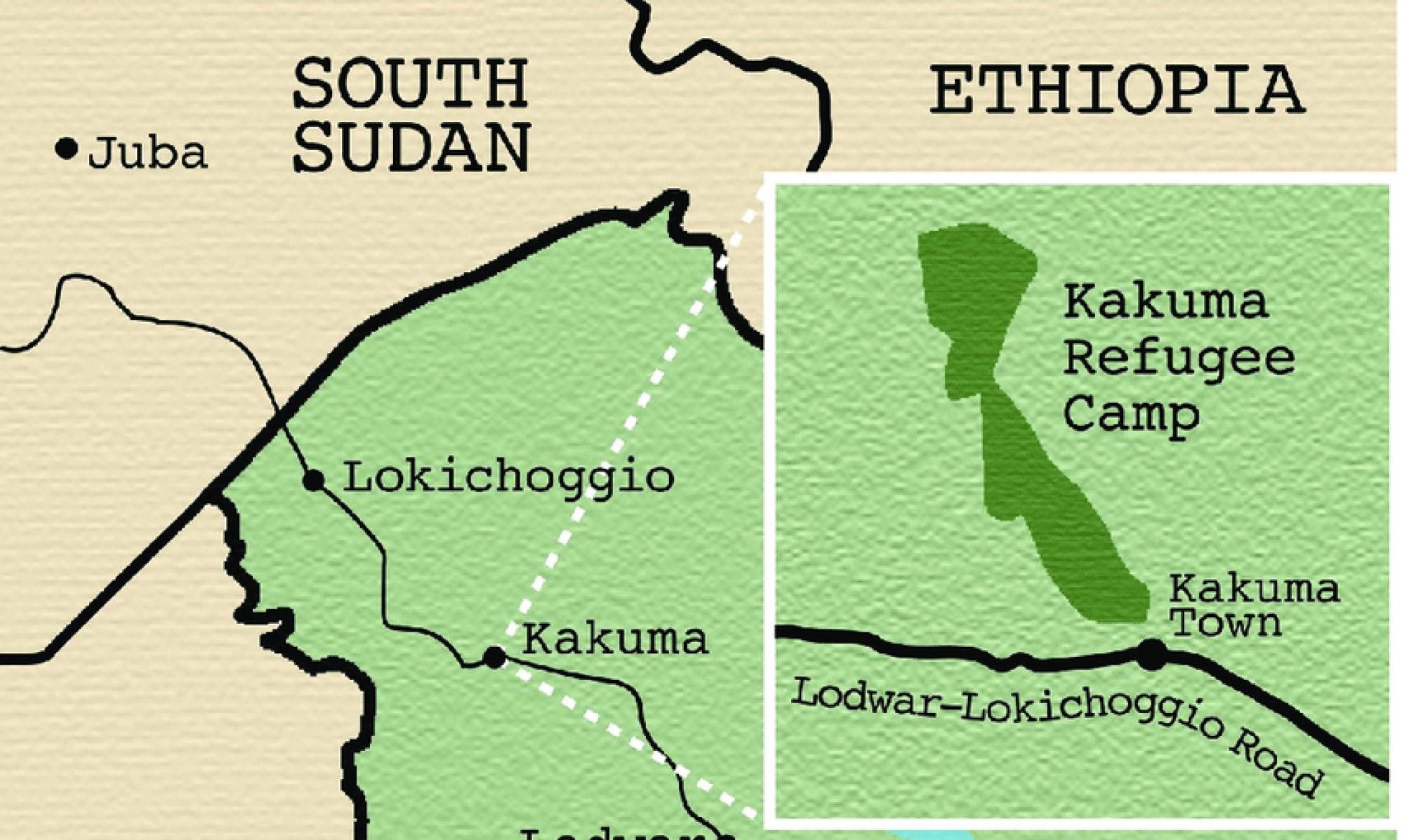
In the meantime, the place of refuge has become a place of desperation. Families in Kakuma Refugee Camp are facing a devastating food crisis. Due to funding cuts, thousands—including children, the elderly, and pregnant women—receive little to no food assistance. Hunger is leading to violence, exploitation, and despair.
Your support will go a long way toward helping Kadjosi and the Kakuma refugees survive the current famine and set up the water conservation tools they need to grow self-sufficient. To donate, please click here.